
Hollow-core vs solid-core and engineered oak internal doors
Hollow-core doors cost €175 to €260 fitted and suit budget rentals with straight frames, but block little sound and accept only 3 to 4 mm of trimming. Solid-core primed doors (€230 to €340) and engineered solid oak leaves (€280 to €520) hold firmer latch feel, dampen hallway noise and tolerate deeper scribing into older Irish frames.
What actually sits inside an internal door leaf, why weight dictates your hinges, and when paying extra for a solid core pays back.
Free, no obligation. One local fitter prices it, not five.
- 10 to 14 kgtypical hollow-core leaf weight
- 26 to 34 kgsolid-core engineered oak leaf
- 3 hingesrequired on every solid-core door
- 10 to 16 mmengineered oak edge lipping depth
Internal door cores compared side by side
Hollow-core
- Fitted Irish price
- €175–€260
- Typical leaf weight
- 10 to 14 kg
- Inside structure
- Cardboard honeycomb
- Trimming per edge
- 3 to 4 mm max per edge
- Sound reduction
- Low; hallway voices carry
- Hinges required
- 2 × 75 mm butt hinges
Solid-core primed
- Fitted Irish price
- €230–€340
- Typical leaf weight
- 22 to 28 kg
- Inside structure
- Dense chipboard / MDF
- Trimming per edge
- 6 to 10 mm per edge
- Sound reduction
- Good; solid muted shut
- Hinges required
- 3 × 100 mm ball-bearing
Engineered solid oak
- Fitted Irish price
- €280–€520
- Typical leaf weight
- 26 to 34 kg
- Inside structure
- Laminated timber core + real oak veneer
- Trimming per edge
- 10 to 16 mm per edge (check lipping thickness)
- Sound reduction
- Strong; dampens TV & stairs noise
- Hinges required
- 3 × 100 mm ball-bearing
Price my doors
Four quick taps and our price shows before we ask for a phone number. One local door fitter rings you, not five.
5 to 8 doors (internal oak or shaker doors), supplied and fitted into existing frames: €1,450 to €3,900.
How these door installation figures are built
Every range reflects going Irish carpentry and door-fitting rates for that job type, door count and scope. Hang-only figures cover trimming leaves, cutting hinge and latch mortices and fitting customer-supplied ironmongery, with a single-door minimum call-out. Supply-and-hang figures add standard Irish leaves (primed, oak shaker, FD30 fire, glazed or external composite/uPVC) and hardware. New linings, architraves, pocket stud framing or masonry lintels are reflected in the new-frames option and confirmed after an in-person measure. Ask whether VAT is charged at 13.5% or 23% under Revenue's two-thirds rule.
Where hollow-core fails in Irish homes
Settled frames and heavy trimming
In semi-detached houses built between 1940 and 1995, door linings settle slightly out of square over decades. A hollow-core leaf has only a narrow 20 to 25 mm softwood perimeter batten. Shaving 8 mm off a tapered top or side slices straight through the timber stile, leaving thin skin that splits around latch screws.
Knocks, handles pulling loose and cold hallways
Hollow leaves rely on a small internal lock block on one side. If a carpenter flips the door the wrong way, handle screws bite into thin hardboard skin and work loose within months. Solid-core leaves accept heavy lever handles on either side and give bedrooms far better privacy beside noisy stairs or home offices.
Why solid timber slabs can warp faster than engineered oak
Many homeowners ask for 100% single-plank solid oak thinking it beats engineered oak. In reality, an engineered solid-core oak door (real thick oak veneers over a cross-laminated timber core with deep solid oak lippings) resists twisting far better over modern underfloor heating and airtight MVHR homes.
Related door fitting guides
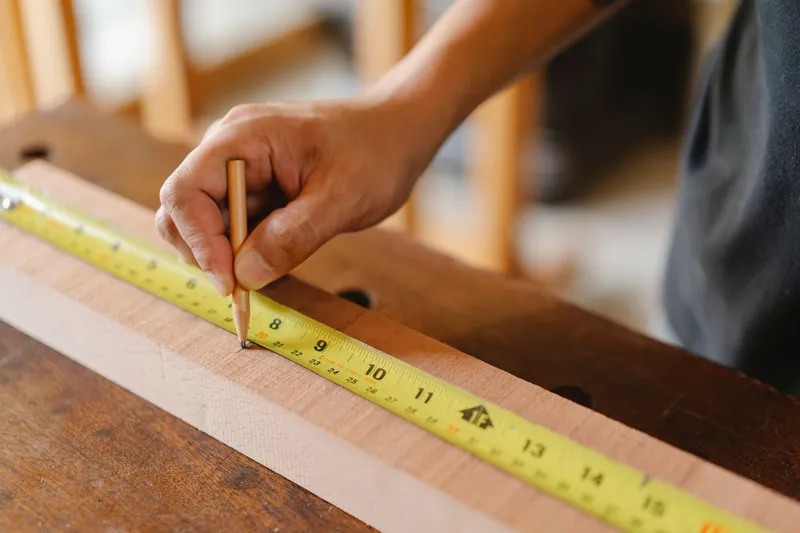 Irish door sizes & trimming78×30, 80×32 and metric 2040×826 sizing plus safe edge-planing limits.
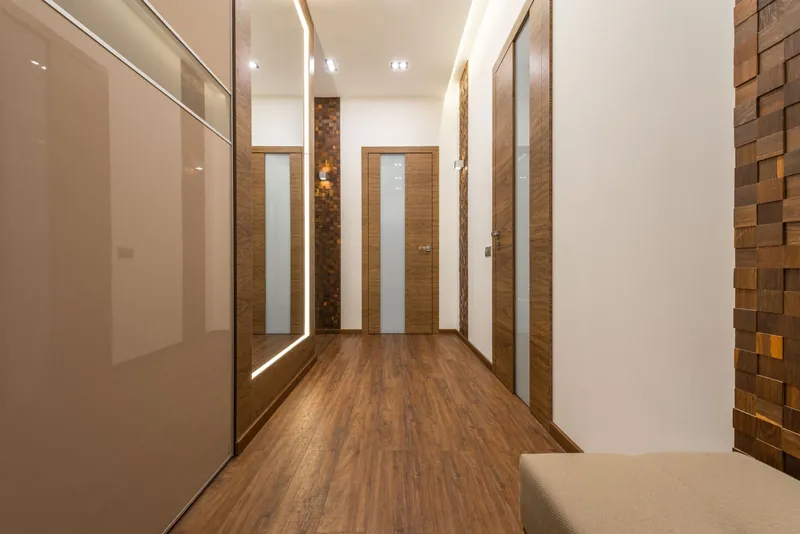 Internal oak & shaker doorsPre-finished oak, primed shaker leaves, hardware and room-by-room fitting.
 Hang-only door fittingCarpenter labour per door when you buy doors from a builders' provider.
 FD30 fire doors30-minute fire doors for 3-storey homes, attic conversions and rentals.
 Hinges, latches & hardwareBall-bearing hinges, mortice latches, thumbturns and external locks.
 Door installation costFull Irish rate card for hang-only labour, supply-and-fit, frames and VAT.
Straight answers before you order doors
Can I mix solid-core downstairs and hollow-core upstairs?
Yes, though most Irish homeowners keep bedrooms and bathrooms on solid-core leaves because upstairs hallways carry footsteps, bathroom extractor fans and late-night conversations directly into sleeping rooms.
Why do solid-core doors need three 100 mm ball-bearing hinges?
A 30 kg oak or solid primed leaf puts continuous shear force on the top hinge. Two light 75 mm brass butt hinges wear down, drop black metal dust onto carpet and make the latch miss the strike plate.
Are all 44 mm FD30 fire doors solid-core?
Yes. Fire-rated FD30 leaves use a dense engineered flaxboard or particleboard fire-resisting core (typically 35 to 45 kg per leaf) and always require 3 CE Grade 13 hinges.
How can I tell if my current doors are hollow or solid?
Knock firmly near the centre panel and lift gently under the handle corner. Hollow doors sound drum-like and feel feather-light; solid-core doors sound dull and carry noticeable weight on the hinges.
Every door installation guide on this site
Door fitting services
Technical & cost guides
See your door fitting figure before you share a number
Pick the door type, rough count and whether you need supply or hanging labour only. Then your outline goes to a single local door fitter in your county.